

Description
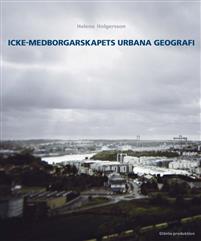
"Hidden refugees", "undocumented migrants", "illegal immigrants" – these labels conceal people who have no place either in the welfare state or in the city. Taking Gothenburg as her starting point, sociologist Helena Holgersson analyses, in her ethnographic study of the urban geography of non-citizenship, how these people navigate the urban environment. Gothenburg is today a successful city of events and knowledge, but also an increasingly segregated city. This study examines how these seemingly parallel cities are interconnected.
For Holgersson’s interviewees, ‘hiding’ turns out in practice to mean passing unnoticed in the city’s bustle. Holgersson analyses the asylum seekers’ own hand-drawn maps: for example, the fact that only one person includes the sea on their map of Gothenburg contrasts with how central the archipelago is in the official image of the city. With simplicity and great insight, Holgersson allows the contrasting images of the city to be superimposed, reflecting a society that is drifting apart.
The question of how the welfare state should deal with the presence of non-citizens is today particularly acute in major cities. When people whose asylum applications have been rejected remain in Sweden and make use of the city, they are also negotiating their position within society at large. In her insightful study, Holgersson highlights both concrete aspects of asylum seekers’ everyday lives and the spectrum of national and global factors that constitute the conditions for Swedish non-citizenship.
Helena Holgersson is affiliated with the Department of Sociology and the Department of Cultural Studies at the University of Gothenburg. She is one of the editors of , published by Glänta in 2010. This is her doctoral thesis.